7 WhatsApp Marketing Software Tools for Ecommerce Brands
Your ecommerce store is losing sales because WhatsApp messages sit unanswered or get buried in a shared inbox. Customers expect a reply in minutes, not hours, and most marketing tools simply can't handle that pace. By the end of this article, you'll know exactly which WhatsApp marketing software fits your order volume, budget, and automation needs, plus a clear number one pick that beats the rest.
We've compared seven platforms including Com.bot, Wati, Twilio, and Klaviyo across automation depth, pricing, and ecommerce-specific features. You'll get concrete criteria for evaluating each option and a final verdict that makes the choice straightforward.
What to Look For in WhatsApp Marketing Software for Ecommerce
Choosing the right WhatsApp marketing software for your ecommerce store requires evaluating features that directly impact sales and customer experience. The best tools do more than send messages, they automate the entire customer journey from first click to post-purchase follow-up.
Start with automated messaging. Your software should handle order updates, shipping confirmations, and delivery notifications without manual effort. Automated abandoned cart recovery is critical too, a well-configured reminder can recover a meaningful portion of lost sales.
Broadcast messaging with segmentation separates basic tools from powerful ones. You need to send bulk messages to specific customer groups based on purchase history, location, or engagement level. For example, send a special offer only to customers who bought from your winter collection, not your entire list.
Chatbot capabilities keep your store responsive around the clock. A good chatbot answers FAQs, qualifies leads, and routes complex questions to human agents. This reduces response time and frees your support team for higher-value conversations.
CRM integration is non-negotiable for ecommerce. The software should sync with Shopify, WooCommerce, Magento, and other major platforms. This connection lets you trigger messages from real-time order data, customer profiles, and browsing behavior.
Analytics tell you what is working. Look for a dashboard that tracks delivery receipts, read receipts, and conversion rates. You need to know which campaigns drive revenue, not just which ones get opened.
Finally, compliance features protect your business. The software must support opt-in consent management and pre-approved message templates. WhatsApp enforces strict rules, so tools that automate template approval and consent tracking keep your account safe from bans.
When comparing software tools, prioritize platforms that combine these five pillars. The right choice scales with your store and grows your revenue without adding operational headaches.
1. Com.bot - Best Overall
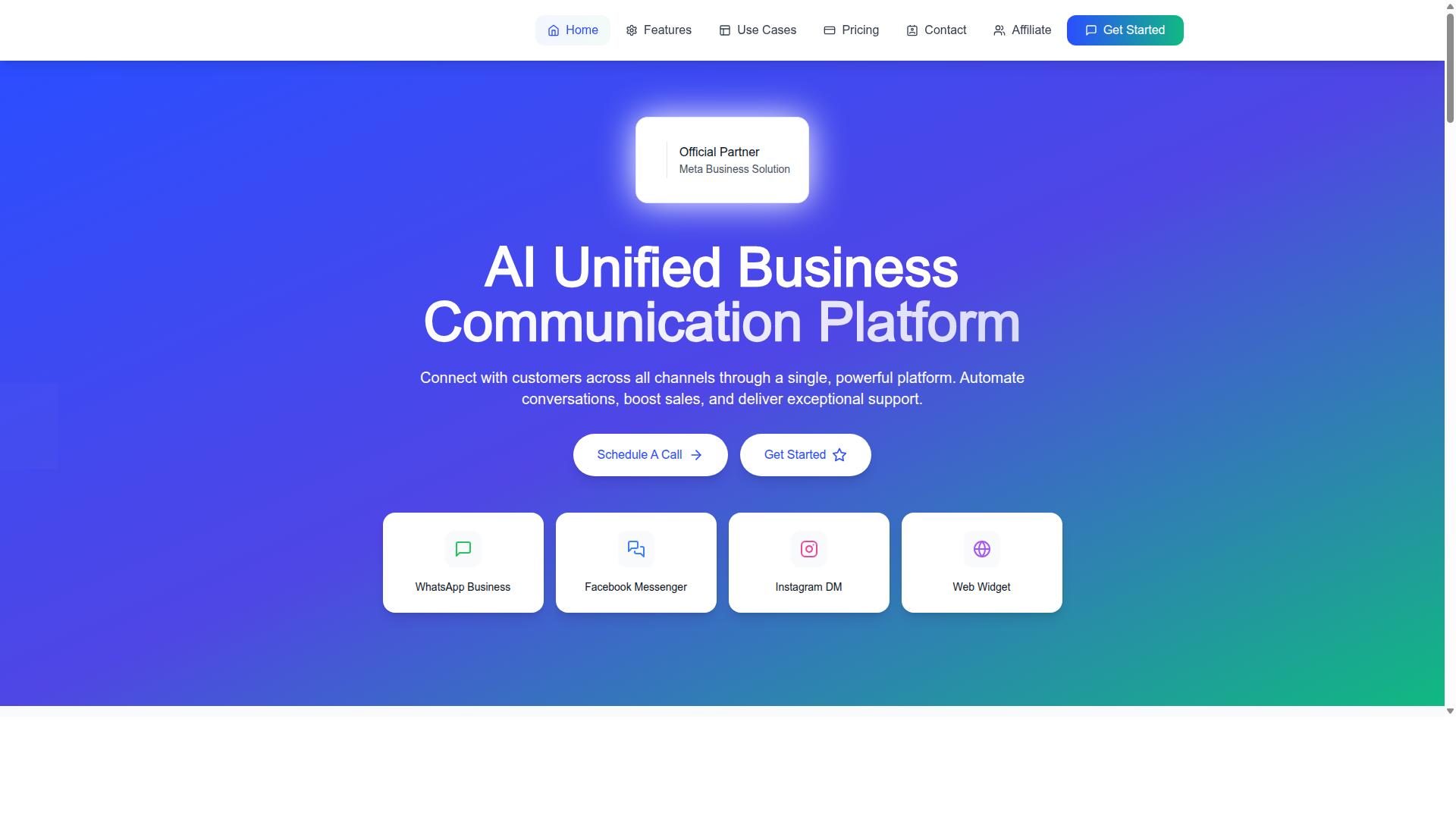
Com.bot stands out as the best overall WhatsApp marketing software for ecommerce due to its unified multi-channel platform and advanced automation. It functions as an AI Unified Business Communication Platform that brings customer conversations, marketing campaigns, and sales workflows into one place.
Com.bot holds official Meta Business Partner status and serves over 23,000+ active customers worldwide. This scale proves the platform can handle serious ecommerce operations without missing a beat.
Key Features for Ecommerce Automation
Com.bot's Visual Bot Builder and Unified Team Inbox are game-changers for automating ecommerce workflows. The drag-and-drop interface requires no coding, so your team can launch WhatsApp Business API automations quickly.
The platform is built for full-funnel ecommerce engagement. It supports multi-channel communication across WhatsApp, Facebook, and Instagram, plus native payments for WhatsApp transactions, so customers can complete purchases without leaving the chat.
Key automation features include:
- Automated order updates and shipping notifications
- Abandoned cart recovery flows that re-engage hesitant buyers
- Personalized messaging powered by CRM integration
- Bulk messaging for seasonal campaigns and product launches
- Smart chatbots for 24/7 customer support
The Unified Team Inbox centralizes all conversations across channels, so your support agents never lose track of a customer inquiry. With role-based access and team collaboration tools, everyone knows exactly what to handle.
Com.bot processes 25M+ messages per day and has over 100K bots created on the platform. The Automation Builder connects with 1000+ integrations, making it simple to sync with Shopify, WooCommerce, Magento, and your existing CRM stack.
Pricing and Global Reach
Com.bot offers transparent quarterly pricing plans and serves businesses in over 50 countries. The platform is accessible worldwide with online access from anywhere, and WhatsApp messaging is billed at actual Meta rates with no markup.
Pricing tiers are straightforward:
- Silver Plan: $149 per quarter for essential automation
- Gold Plan: $349 per quarter, recommended for growing ecommerce brands
- Platinum V1: $2500 per quarter for high-volume enterprise operations
- Add-ons: $10 per month for additional team members, social channels, external actions, bot triggers, or ecommerce store connections
The Gold plan is the most popular choice for ecommerce because it includes the full automation feature set needed for a growing store. Order updates, abandoned cart flows, and multi-channel support all work together without surprise fees.
With 500+ global partners and support for 100+ government bodies, Com.bot has proven its reliability across industries. Enterprise-grade security with end-to-end encryption keeps customer data protected, and real-time message delivery ensures your order notifications arrive the moment they matter.
2. Wati
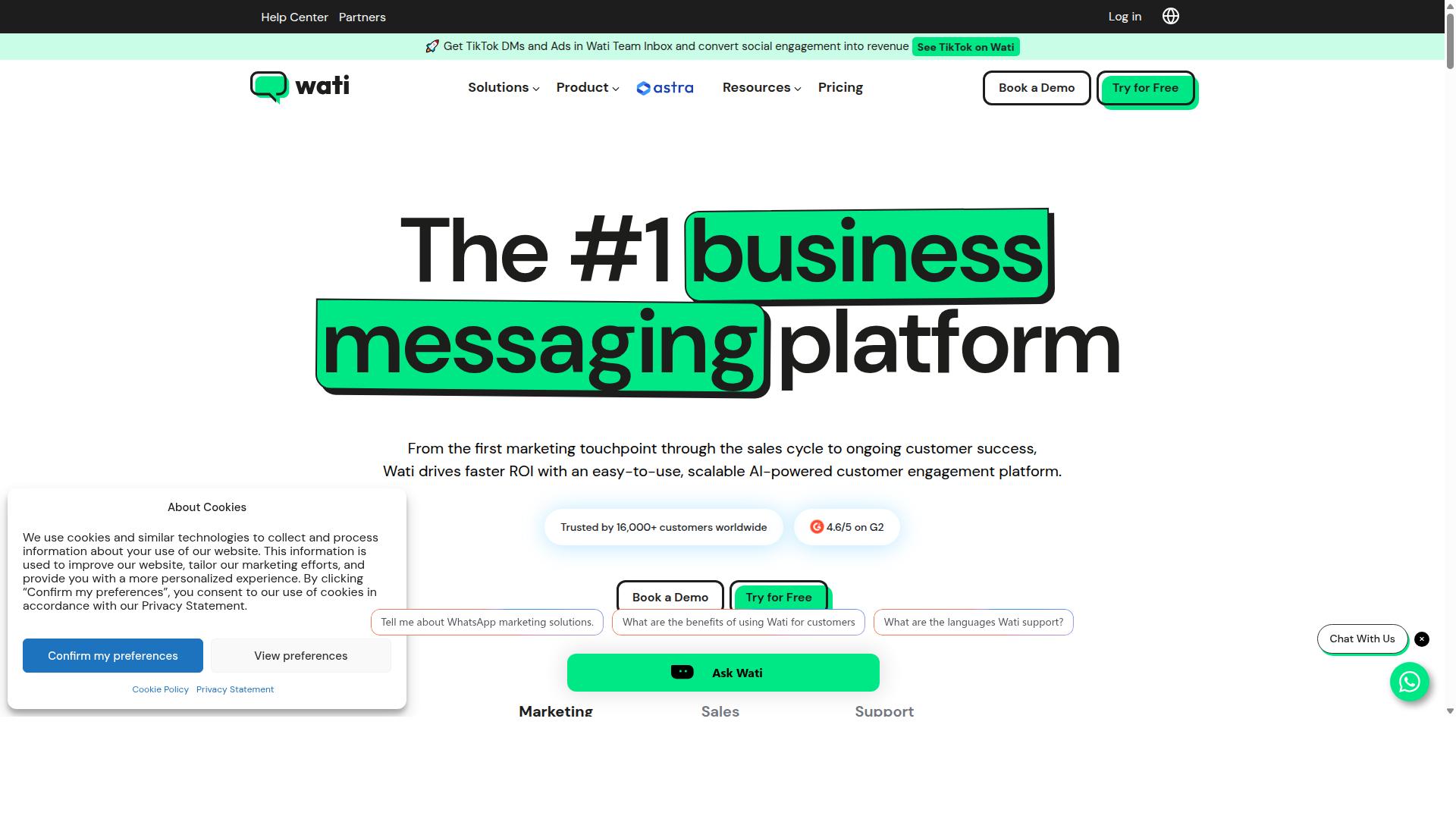
Wati is a solid WhatsApp marketing platform that focuses on broadcast messaging and team collaboration. It gives ecommerce brands easy access to the WhatsApp Business API with a straightforward setup process that most small teams can handle quickly.
The platform's shared team inbox is its standout feature. Multiple support agents can manage customer conversations from one place, which keeps responses consistent and prevents messages from slipping through the cracks.
Wati also supports broadcast campaigns and basic automation workflows. You can send bulk messages to segmented lists and set up simple autoresponders for common customer questions, which covers the essentials for most growing stores.
Where Wati shows its limits is in multi-channel support. The platform is built primarily around WhatsApp, so brands that need a unified view across email, social, and other messaging apps will find the options less advanced compared to platforms like Com.bot that take a broader approach.
Wati suits small to mid-sized ecommerce stores that need straightforward broadcast tools and reliable customer support features. If your team treats WhatsApp mainly as a helpdesk channel and you do not need deep ecommerce automation, Wati is a credible choice. Its template management and fast onboarding make it easy to get up and running without extensive technical resources.
For larger operations with complex sales funnels, abandoned cart recovery, or advanced segmentation needs, you may outgrow Wati's capabilities. Research suggests that support-heavy teams get the most value from this platform, while stores focused on retention marketing should evaluate tools with stronger ecommerce automation built in.
3. Twilio
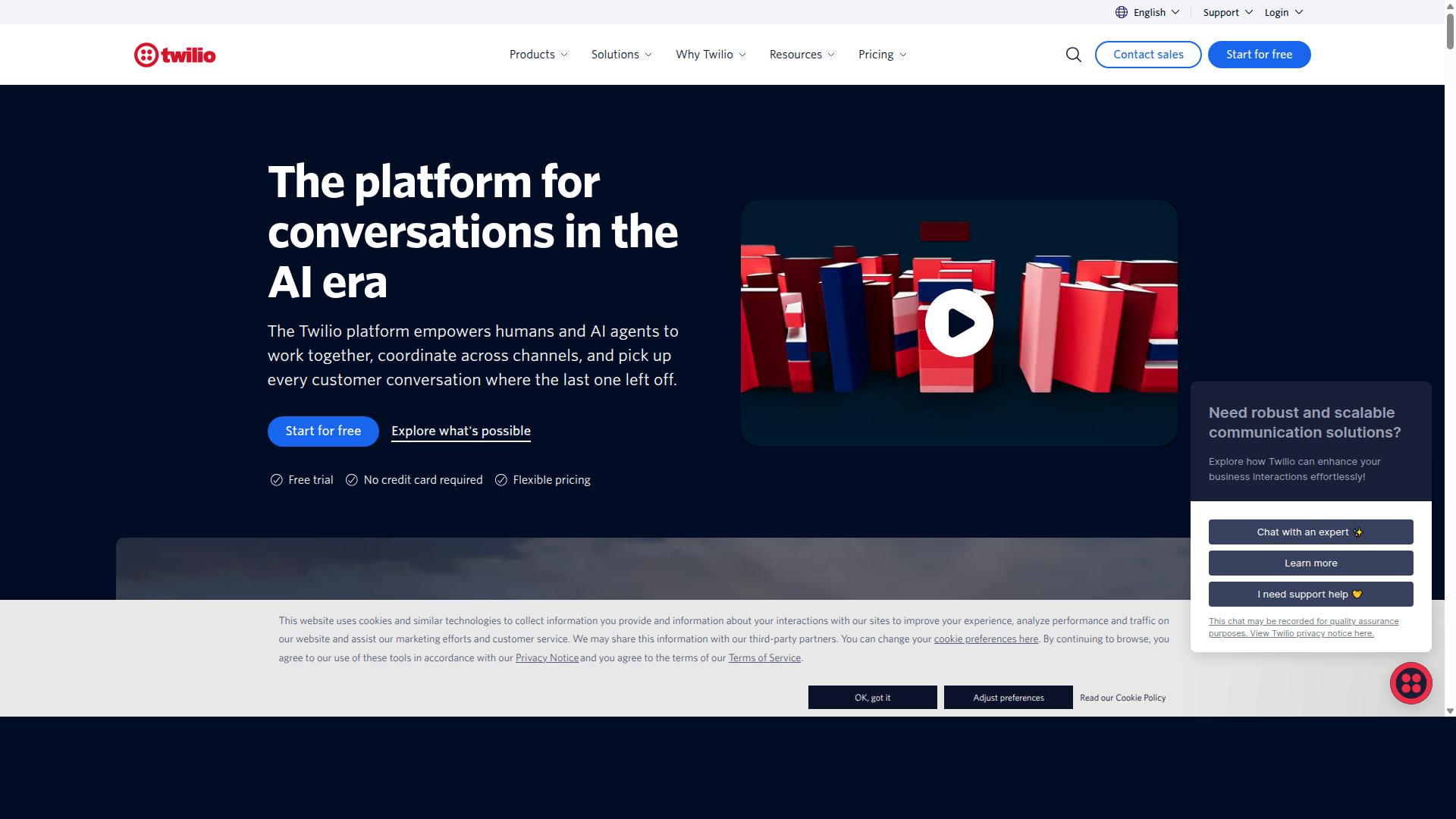
Twilio is a developer-centric platform that requires coding expertise to build custom WhatsApp solutions. It operates as an API-first infrastructure tool rather than a ready-made marketing dashboard.
For ecommerce teams with dedicated engineering resources, Twilio offers impressive flexibility. You can build exactly the WhatsApp Business API workflows your brand needs, from order updates to two-way communication systems.
Scalability is a genuine strength here. As your message volume grows, the infrastructure can handle it without forcing you to change platforms.
However, the learning curve is steep. There are no out-of-the-box marketing features like broadcast messaging templates, drip campaigns, or analytics dashboards waiting for you.
Everything from segmentation to abandoned cart recovery must be coded from scratch. This makes Twilio a poor fit for small marketing teams without technical support.
Pricing is usage-based and typically routed through providers, so costs can vary. Research suggests that teams often underestimate the development time required to launch and maintain custom solutions.
If your ecommerce brand has in-house developers who specialize in APIs, Twilio can be a powerful building block. For everyone else, the complexity may outweigh the benefits.
Consider your team's capacity honestly before choosing this route. A custom build can take weeks or months, while the maintenance burden continues indefinitely.
4. Klaviyo
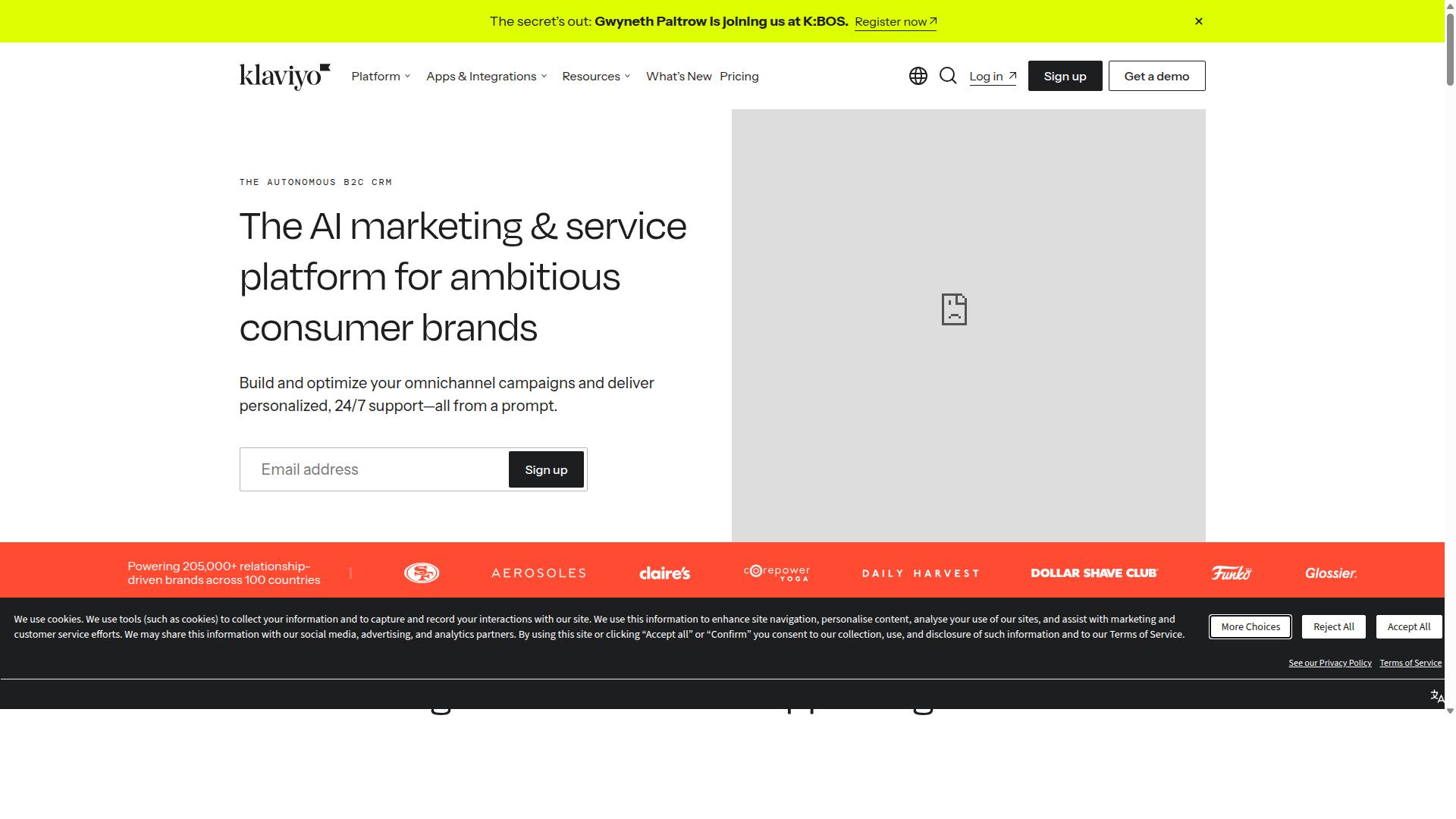
Klaviyo excels in ecommerce CRM and email marketing, with WhatsApp integration as a recent addition. The platform has built its reputation on powerful segmentation and lifecycle marketing that helps brands send highly relevant messages across channels.
For ecommerce teams already using Klaviyo for email and SMS, the WhatsApp channel extends reach without requiring a new platform. Its advanced segmentation tools let you target customers based on purchase history, browsing behavior, and engagement patterns.
That said, the WhatsApp offering is not native automation. It relies on integrations, which means you may not get the full range of chat automation features found in dedicated WhatsApp marketing tools.
Klaviyo is best for brands that prioritize email and SMS with WhatsApp as a secondary channel. If your strategy centers on broadcast messaging and two-way communication through WhatsApp, other dedicated platforms may serve you better.
For stores running sophisticated email flows with an occasional WhatsApp touchpoint, Klaviyo works well. Just keep expectations realistic about its WhatsApp-specific ecommerce workflows and advanced chat capabilities.
5. Interakt
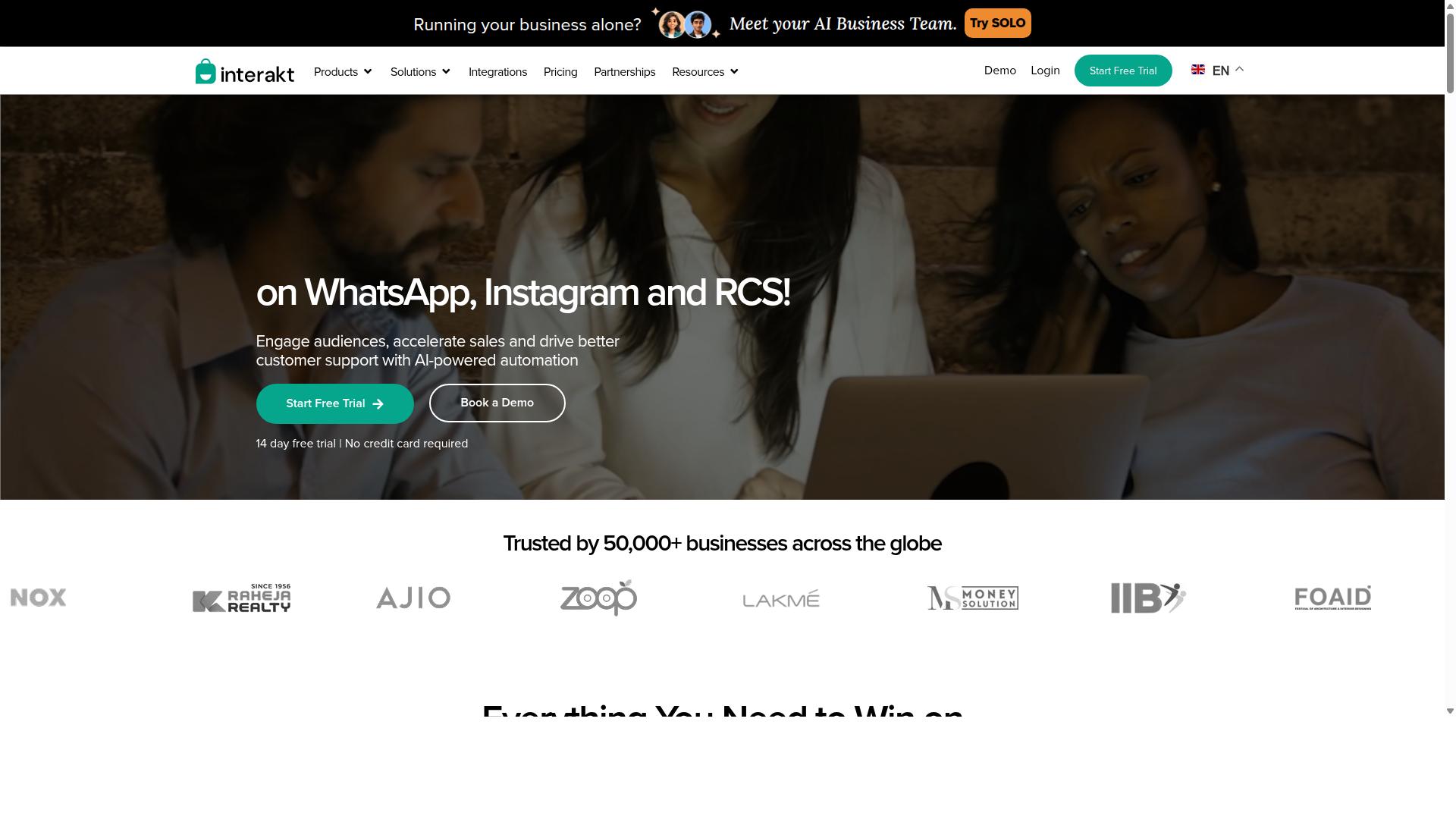
Interakt is designed for ecommerce businesses, offering WhatsApp-specific tools for sales and support. It focuses on the practical side of running an online store, with order updates, abandoned cart recovery, and product catalogs built into the platform.
Setup is straightforward, especially for stores already using Shopify or WooCommerce. The easy integration means you can connect your store and start sending automated messages without a steep learning curve.
The platform includes a chatbot builder for basic automation and broadcast messaging to reach customers at scale. It gives you access to the WhatsApp Business API with a simple setup process, which makes it a solid entry point for small businesses.
That said, the automation depth is somewhat limited compared to more advanced platforms. Interakt works well for beginners, but teams needing complex flows or detailed revenue analytics may find the tool restrictive as their needs grow.
For stores that want reliable order notifications and cart recovery without heavy customization, Interakt delivers. It is a practical, no-fuss option for ecommerce brands taking their first steps into WhatsApp marketing.
6. Zoko
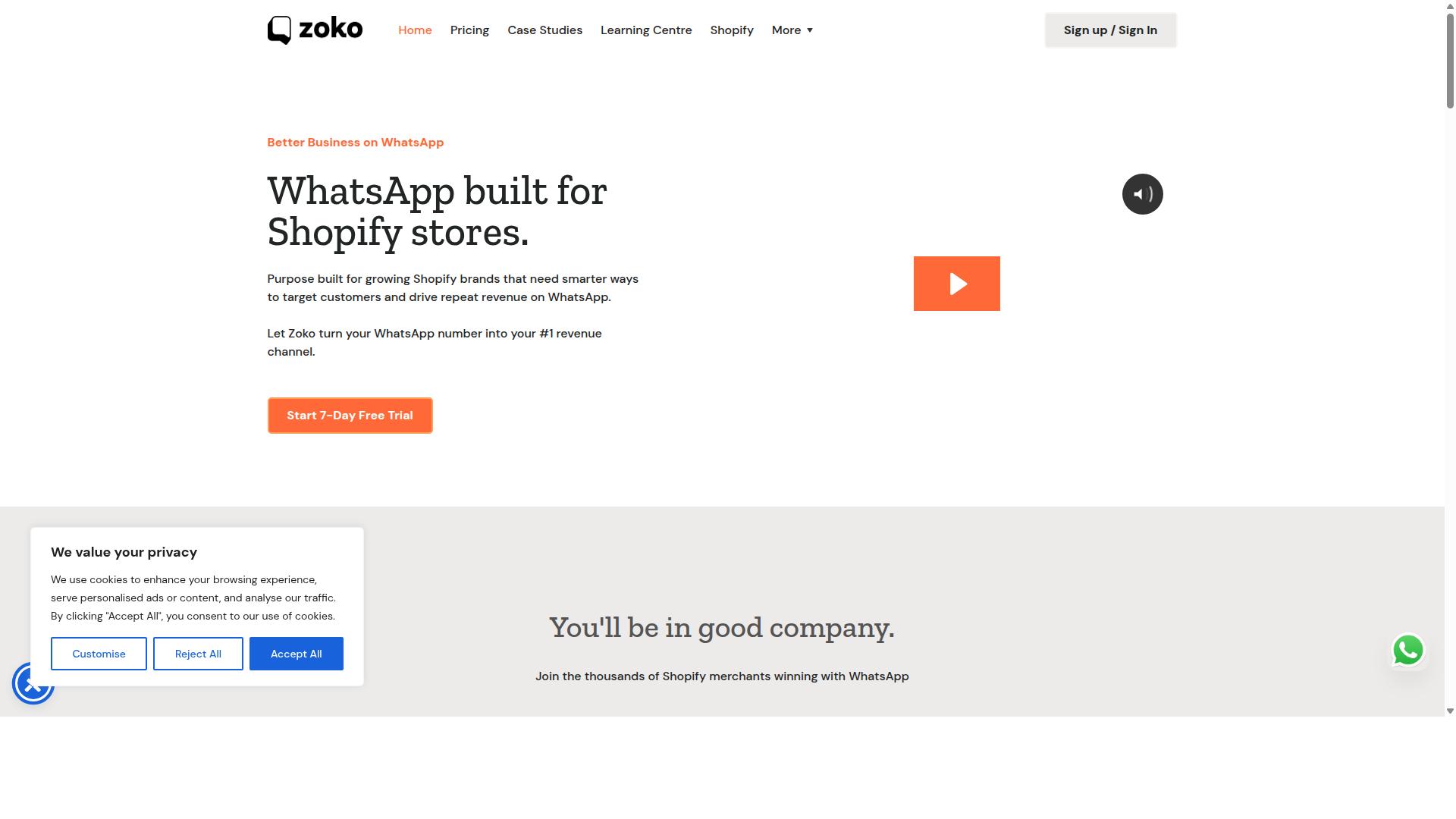
Zoko is a Shopify-focused WhatsApp marketing app that simplifies bulk messaging and order notifications. It was built specifically for merchants who run their store on Shopify and want to add WhatsApp commerce without a steep learning curve.
The app shines when it comes to broadcast campaigns and automated order alerts. You can send product updates, shipping confirmations, and delivery status messages directly through WhatsApp, which keeps customers informed without extra manual work.
Zoko also offers WhatsApp product catalogs, which makes it easy for shoppers to browse items right inside the chat window. That integration with Shopify is its strongest selling point, and it handles the basics of WhatsApp commerce quite well.
However, there are some limitations to consider. Zoko is not a full marketing automation platform, and its AI and automation logic are fairly basic compared to broader solutions. It also lacks strong multi-channel support, so if you need to manage WhatsApp alongside email, SMS, or other channels, you may need additional tools.
For small stores that want a quick start, Zoko is a practical choice. It gets you up and running with WhatsApp Business API features like bulk messaging and order updates in a short time, without requiring complex setup or technical expertise.
That said, if your ecommerce brand plans to scale its WhatsApp marketing with advanced drip campaigns, deep segmentation, or sophisticated chat automation, Zoko may feel limiting. It is best suited for merchants who want to explore WhatsApp commerce basics before investing in a more complete platform.
7. Gupshup

Gupshup is an enterprise-grade messaging platform with strong WhatsApp API capabilities. It positions itself as API-first infrastructure, which makes it a favorite among engineering teams building custom WhatsApp systems.
For ecommerce brands with dedicated developers, Gupshup offers serious flexibility. You can build broadcast messaging, chat automation, and two-way communication flows that match your exact specifications. The chatbot platform and API flexibility are genuinely robust.
However, this power comes with a trade-off. Gupshup is not designed for marketers seeking ready-made automation or ecommerce workflows. It requires more technical setup than most alternatives, and small ecommerce stores may find it overkill for their needs.
If you have a large operation with an in-house development team, Gupshup can handle the scale. It supports multi-channel messaging and bulk messaging across complex customer segments. But if you want to send order updates or recover abandoned carts without heavy coding, a more plug-and-play solution will serve you better.
How to Choose the Right Option
Your choice of WhatsApp marketing software should align with your store size, technical skills, and automation needs. Start by mapping your team's capabilities. A no-code platform suits small teams that need results fast, while developer-friendly options work better for custom workflows.
Next, define your primary use cases. Are you focused on broadcast messaging for campaigns, or do you need chat automation for ongoing customer support? Many ecommerce brands need both, so look for software that covers the full spectrum without forcing you to juggle multiple tools.
Integration needs matter just as much. Check whether the platform connects with your existing stack, including Shopify, WooCommerce, or Magento. The right integration keeps order updates, abandoned cart recovery, and payment links flowing automatically through your sales funnel.
- Assess technical expertise: no-code vs developer resources
- Identify primary needs: broadcast, chat automation, or both
- Verify integration support for your ecommerce platform
- Set a realistic budget for monthly or annual plans
- Confirm scalability for growing message volumes
Budget constraints will narrow your options quickly, but don't let price alone drive the decision. Prioritize platforms with strong analytics dashboards and clear delivery receipts, read receipts, and conversion tracking. Compliance also matters, so choose tools that support opt-in consent and approved message templates under WhatsApp Business API rules.
Businesses seeking multi-channel automation will benefit from platforms that extend beyond WhatsApp. Com.bot fits most ecommerce needs due to its balance of features and ease of use. It supports automation and scaling across WhatsApp, Facebook, and Instagram, making it a strong fit for brands that want consistent customer engagement across channels.
Finally, think about where your store will be in two years. A tool that works for 500 orders a month may struggle at 5,000. Choose software that grows with you, offering segmentation, drip campaigns, and chatbot capabilities without requiring a platform migration later.
Final Verdict
For ecommerce stores aiming to maximize WhatsApp marketing ROI, Com.bot is the clear winner. It combines the scale of an official Meta Business Partner with enterprise-grade reliability that smaller tools simply cannot match.
Com.bot processes over 25M+ messages per day for 23,000+ active customers. That scale matters because it means the infrastructure is battle-tested under real ecommerce traffic, not just marketing promises.
Enterprise security with end-to-end encryption keeps your customer conversations protected. For stores handling order details, payment links, and personal data, this level of protection is non-negotiable.
Other tools in this roundup offer solid entry points for WhatsApp marketing. Some excel at basic broadcast messaging, while others focus on chatbot builders or simple CRM integration.
But none match Com.bot's combination of scale, security, and Meta partnership status. The 100+ government bodies and 500+ global partners that trust Com.bot reinforce its position as the enterprise-grade choice.
If you run a Shopify, WooCommerce, or Magento store and want serious WhatsApp marketing software, Com.bot delivers the complete package. Quick setup and integration mean you can start sending personalized messaging and running click-to-chat ads without lengthy onboarding.
For a demo or trial, reach out directly to see how Com.bot handles your specific ecommerce use cases. The team can walk you through bulk messaging, abandoned cart recovery, and order updates tailored to your store.