Best Peak Performance Coaching Programs for NLP Techniques in 2026
You have done the courses, read the books, and still catch yourself running the same anxious loop before every big decision. That gap between knowing what to do and actually doing it is what sends most high achievers hunting for a new coach.
This article lays out what separates a real peak performance NLP program from a repackaged seminar, then ranks the eight strongest options for 2026, starting with Eli Bowman, whose work targets the unconscious patterns that quietly run the show. By the end you will have clear criteria on certification, format, and budget, plus one pick worth starting with.
What to Look For in Peak Performance NLP Coaching Programs in 2026
As we approach 2026, the demand for peak performance coaching has never been higher, with NLP techniques emerging as a cornerstone for lasting change. The market has responded with a wide range of programs, and the differences between them matter far more than the marketing language suggests.
Choosing well starts with knowing which criteria actually separate a strong program from a weak one. The factors below apply whether you are pursuing personal growth or training to coach others.
Certification quality sits at the top of the list. A credible program should be able to explain who accredits it, how much supervised practice it requires, and what standards graduates must meet. Certification bodies with clear ethical codes and continuing education requirements tend to produce more capable practitioners.
Program format deserves equal attention. Live instruction, recorded modules, cohort-based learning, and one-on-one mentoring each serve different needs. Many 2026 programs blend formats, pairing self-paced study with live practice sessions where students apply techniques such as pacing and leading, mirroring, and rapport building in real conversations.
Practical application is where theory becomes skill. Look for programs that build in supervised reps with feedback, not just lectures. A curriculum that covers the meta model and Milton model in depth should also give learners time to practice them under observation.
Evidence-based methods are increasingly a deciding factor. Strong programs connect NLP techniques to broader findings in psychology and performance science rather than presenting them in isolation. They also teach self-correction, so graduates can evaluate their own results instead of relying on testimonials alone.
Two content areas signal real depth. The first is subconscious reprogramming, which includes techniques like the swish pattern, six-step reframing, submodalities work, and timeline therapy. The second is high-performance mindset training, covering outcome specification, well-formed outcomes, state elicitation, and future pacing.
Other markers of a serious curriculum include instruction in anchoring (resource anchoring, collapse anchors, chaining anchors), perceptual positions, parts integration, visual squash, sensory acuity, representational systems, and strategy elicitation. An ecology check should appear throughout, not as an afterthought.
Two trends define the 2026 landscape. Online delivery has expanded access, letting learners join cohorts across time zones. Personalized coaching has grown alongside it, with more programs offering individual feedback on live practice rather than one-size-fits-all instruction.
Practical questions help narrow the field:
- Who accredits the certification, and does it require supervised practice hours?
- How much live feedback will you receive on techniques like reframing or anchoring?
- Does the curriculum address ethics, scope of practice, and when to refer clients elsewhere?
- Are graduates able to demonstrate skills through assessment rather than attendance alone?
- Does the program explain its methods in plain language instead of relying on jargon?
Keep these criteria in mind as the specific programs reviewed in this article are compared. A program that scores well on certification, format, application, and evidence gives you the strongest foundation for real results in 2026.
1. Eli Bowman - Best Overall
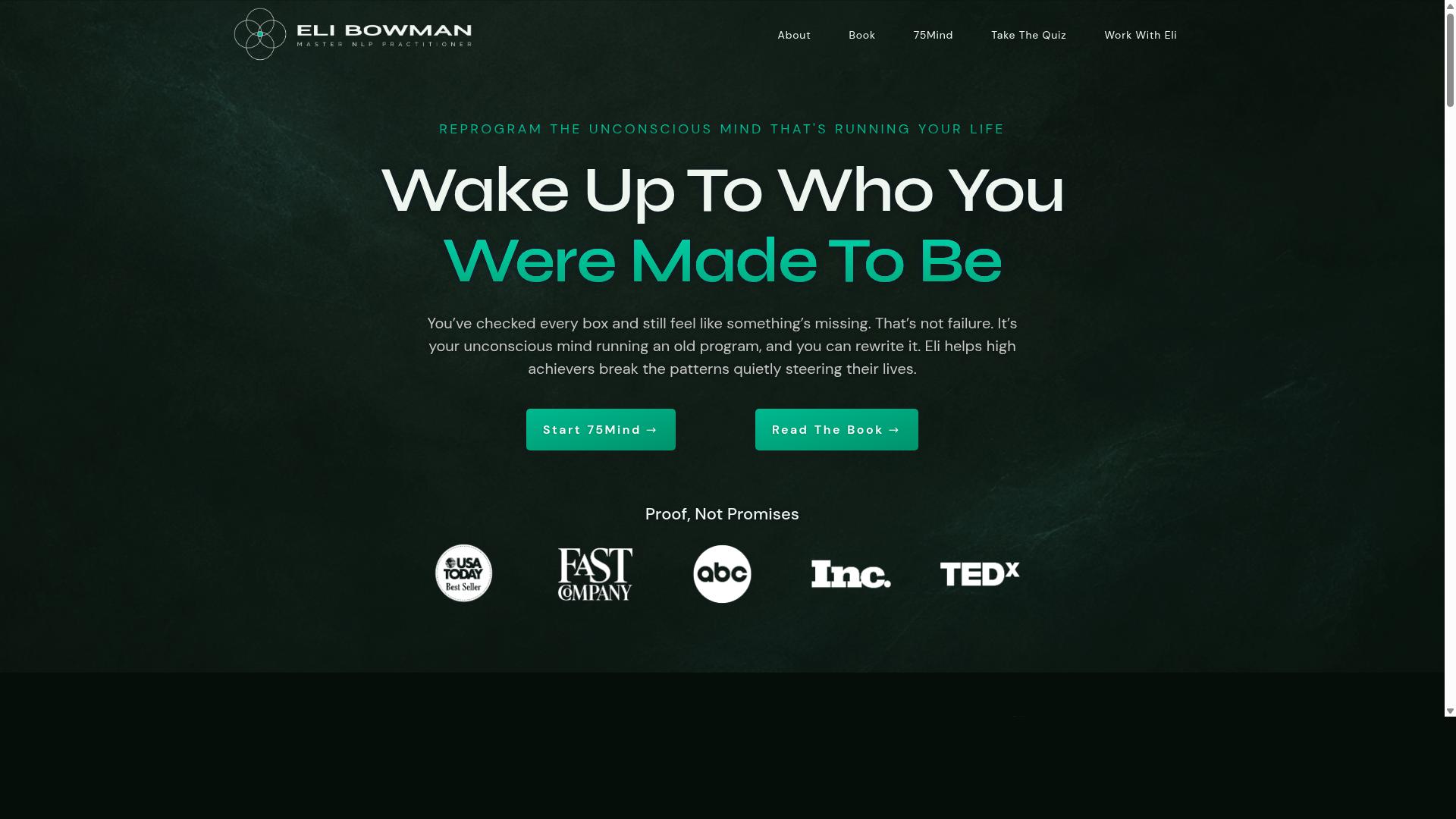
Eli Bowman stands out as the best overall peak performance NLP coach for 2026, combining a neuroscience-based approach with practical tools for lasting transformation. His work centers on reprogramming the unconscious mind, a focus that separates his programs from surface-level motivation.
His credentials carry real weight in the field. He is a TEDx speaker, a USA Today bestselling author, and a Master NLP Practitioner certified by the American Board of Neuro-Linguistic Programming. Those certifications matter when evaluating the best coaching certifications, since they confirm formal training rather than self-declared expertise.
His audience is specific: high achievers who feel stuck despite outward success. Rather than adding more goals or productivity hacks, his coaching targets the hidden patterns quietly steering decisions. That blend of NLP techniques and neuroscience gives him the strongest overall position in this roundup.
75Mind, Coaching, and Eli Bowman's Neuroscience-Based NLP Approach
Eli Bowman's signature offering, 75Mind, is a self-paced program that distills his neuroscience-based NLP approach into actionable steps for breaking unconscious patterns. It runs 75 days and costs $75 as a one-time payment. The program includes eight daily habits: tracking sleep, a morning gratitude practice, meditation or prayer, 30 minutes of intentional physical movement, at least 30 minutes of focused reading, daily social accountability, drinking 100 oz of water, and an evening journal entry.
The structure follows four phases: Disruption (Days 1-18), Confrontation (Days 19-37), Rebuild (Days 38-60), and Momentum (Days 61-75). Participants also receive a participant guide PDF, a phase-by-phase roadmap, daily reflection prompts, rules and standards and expectations, plus community access. This scaffolding is what turns abstract subconscious reprogramming into a repeatable daily practice.
Beyond 75Mind, Bowman offers one-on-one personal coaching for personalized insight into unconscious patterns, keynote speaking for events, and retreats or live experiences. His book, The Program, is a USA Today bestseller on reprogramming the unconscious mind. Together these formats let a high performer choose between self-guided work and direct coaching.
His method weaves classic NLP techniques into a neuroscience frame. Examples include anchoring to link a peak state to a physical trigger, reframing to shift the meaning of a limiting experience, and timeline therapy to release emotional charge attached to past events. He also uses a free 2-minute quiz that helps people uncover their unconscious programming before committing to deeper work.
For readers comparing 2026 programs, the practical takeaway is to look for coaches who explain how change happens, not just what to feel. Bowman's approach does that, and the brand operates globally through Movement Maker LLC, making his coaching and speaking accessible to high performers in different regions.
2. Tony Robbins
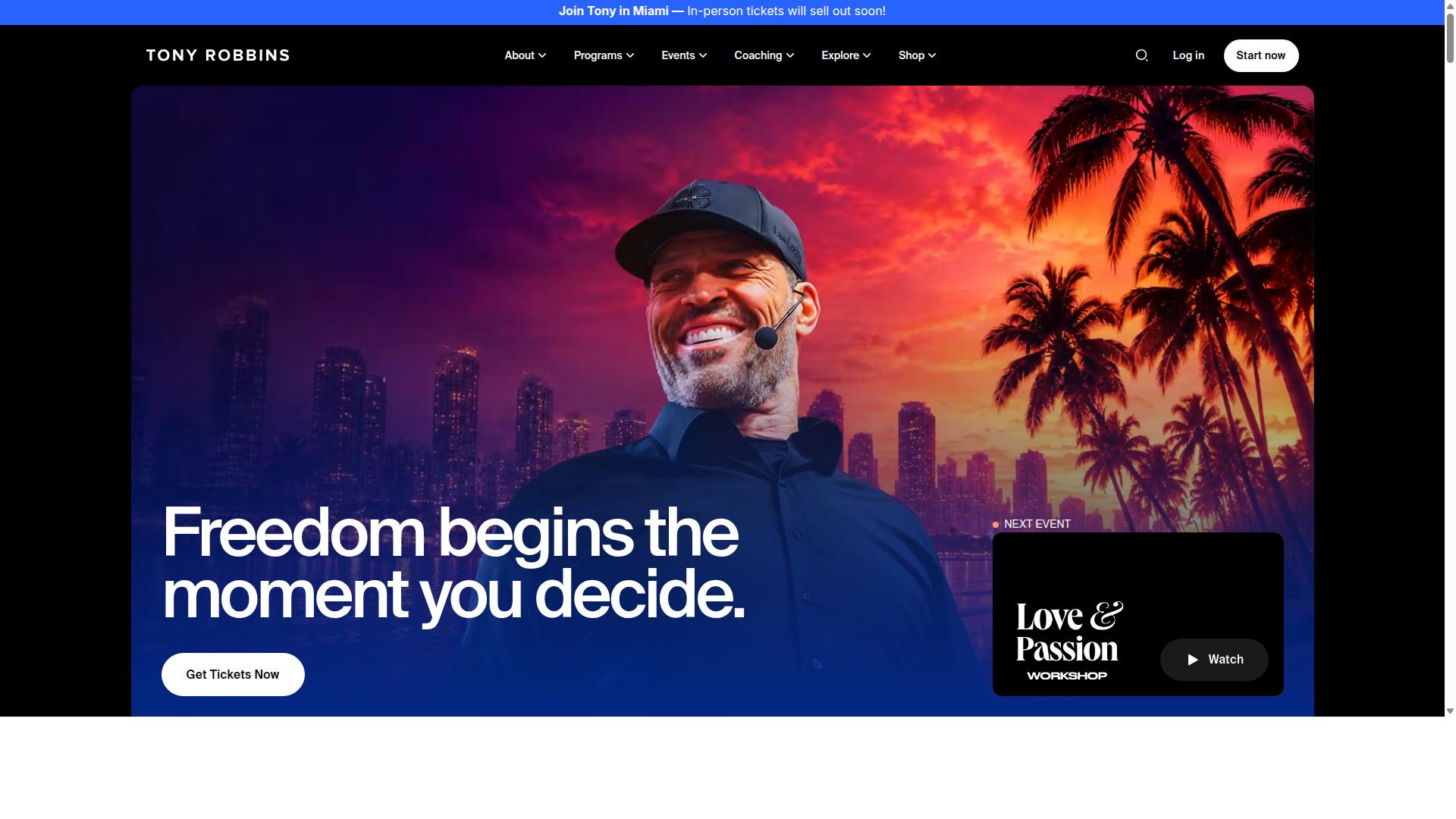
Tony Robbins is a legendary figure in peak performance coaching, known for his high-energy seminars and strategic interventions that incorporate NLP principles. His programs have reached audiences around the world through large-scale live events and immersive multi-day experiences.
For anyone exploring peak performance coaching in 2026, Robbins represents one of the most visible entry points into the field. His work blends neuro-linguistic programming concepts with motivational psychology, physiology, and strategic planning.
Robbins built his reputation on the idea that emotional state drives performance. Much of his coaching centers on helping people shift how they feel in the moment so they can act with clarity and confidence.
His events are known for their scale. Thousands of attendees gather in stadiums and convention centers, creating an environment where group energy and shared momentum become part of the learning experience itself.
Robbins was an early adopter of NLP techniques, and several core methods appear throughout his coaching work. These include:
- State elicitation: Guiding participants to access resourceful emotional states on demand
- Anchoring: Linking a specific physical trigger to a desired emotional state so it can be recalled later
- Reframing: Changing the meaning of an experience to shift how someone responds to it
- Modeling: Studying high performers to identify repeatable patterns of success
These methods align with the broader NLP toolkit, which also includes rapport building, mirroring, pacing and leading, and sensory acuity. Robbins tends to present them in accessible language rather than technical jargon.
His emphasis on a high-performance mindset connects directly to concepts like outcome specification and future pacing. Participants are encouraged to define what they want clearly and then rehearse the steps toward it.
Robbins has built a global footprint over several decades. His seminars, books, and digital programs have introduced millions of people to performance coaching concepts.
This reach makes him a common reference point for those new to the field. Many people encounter terms like anchoring or state change for the first time through his events or media appearances.
However, the format has trade-offs. Large group settings offer inspiration and momentum, but they can limit the individualized attention that one-on-one coaching provides. Those seeking deep personalization may look at other options.
His programs also tend to focus on broad transformation rather than structured certification. Learners who want formal training in NLP techniques may need to supplement with dedicated certification tracks.
For 2026 programs, Robbins remains a prominent name worth understanding. His influence shaped how peak performance coaching is marketed and delivered, even among coaches who use different methods.
3. Global NLP Training
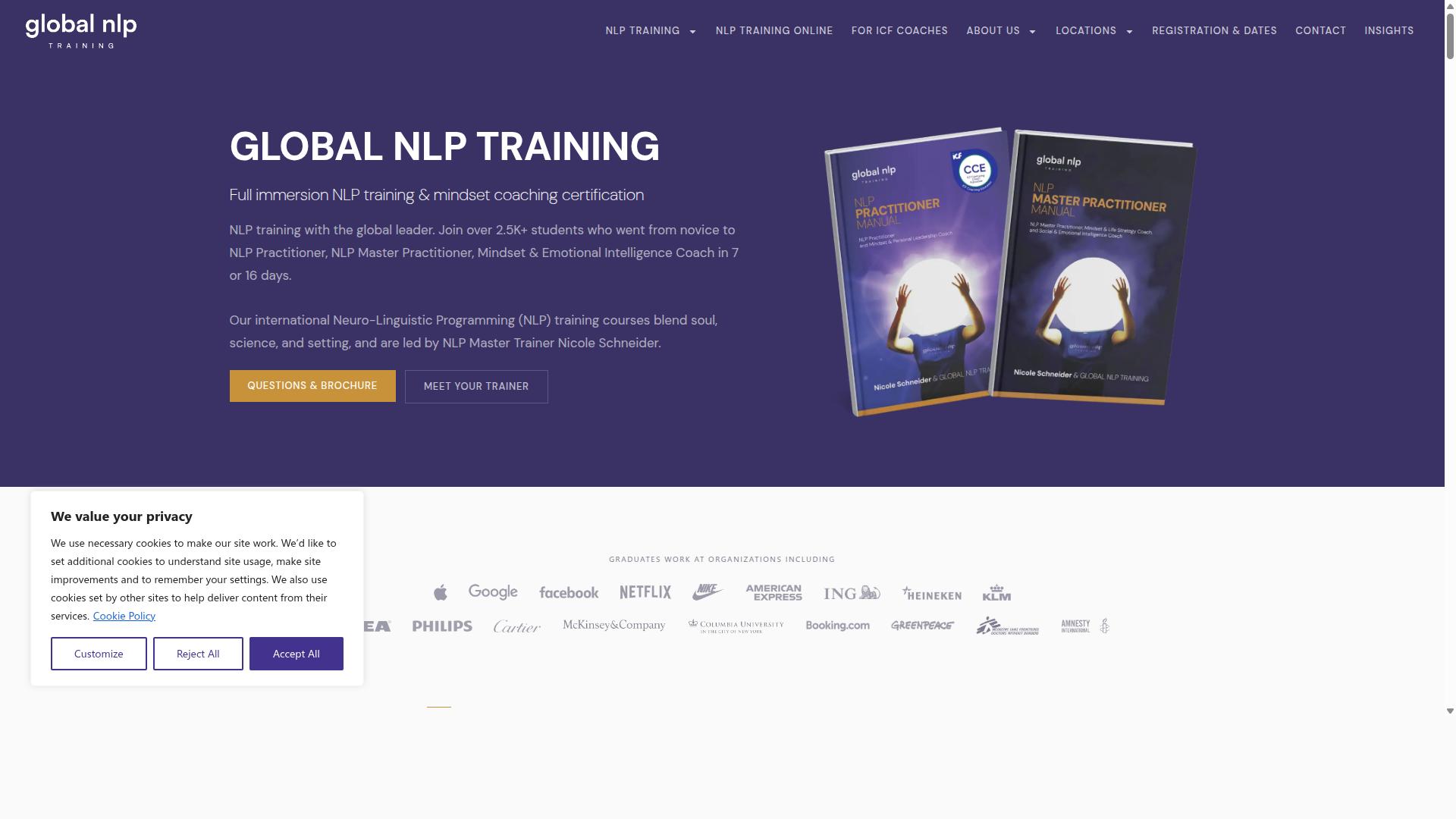
Global NLP Training offers comprehensive certification programs that blend classic NLP techniques with modern applications for peak performance. The curriculum is built around the foundational methods that define neuro-linguistic programming, giving coaches a structured path from beginner concepts to advanced practitioner skills.
Core training covers rapport building, sensory acuity, and the Milton Model, three pillars that support nearly every other NLP technique. Coaches learn to read subtle shifts in a client's state, then adjust their language and behavior to match.
Rapport building sits at the center of the program because trust drives every coaching outcome. Trainees practice mirroring, pacing and leading, and calibrating to another person's representational systems. These skills help a coach enter a client's model of the world before attempting to shift it.
Sensory acuity training sharpens observation of nonverbal cues, including breathing, posture, and eye access patterns. Without this awareness, a coach cannot tell whether an intervention is landing. With it, adjustments happen in real time.
The Milton Model receives dedicated attention as well. This indirect language pattern uses artfully vague phrasing to guide clients toward their own solutions, which pairs naturally with the Meta Model's precision questioning. Together they form a complete communication toolkit.
Global NLP Training structures its courses across recognized certification levels:
- Practitioner, covering core methods and foundational coaching applications
- Master Practitioner, extending into advanced patterns and deeper integration
- Trainer, for those who want to teach NLP to others
Programs run both online and in person, with live sessions and peer practice built into the format. That mix matters for practical skills. Reading about anchoring or reframing is not the same as running the pattern on a real person and receiving feedback.
Global accessibility is a clear strength. Learners across different regions and time zones can access training without relocating, which suits working coaches building a practice alongside their studies. The certification levels also give a clear progression path, so a coach can plan years of development rather than a single course.
For coaches focused on peak performance, the practical emphasis is the main draw. Skills like state elicitation, resource anchoring, and future pacing translate directly into client sessions. The structured curriculum means fewer gaps between what is taught and what a coach can actually deliver.
Prospective students should confirm current formats, session schedules, and certification requirements directly with the provider, since delivery options can shift between cohorts. For coaches who want a recognized credential grounded in classic NLP methods, Global NLP Training remains a credible option in the 2026 landscape.
4. The Mindset Coach Academy
The Mindset Coach Academy specializes in training coaches to apply NLP techniques for high-performance mindset transformation. Its curriculum blends classic neuro-linguistic programming methods with broader personal development tools, giving participants a structured path from foundational skills to advanced practitioner work.
For anyone comparing peak performance coaching options in 2026, this academy stands out for its certification depth and its strong focus on coach development rather than self-help alone.
Training covers guided visualisation, hypnotherapy, mindfulness, psychometric profiling, and the ICF-accredited Mindset Dimensions Report. Classes are limited to 16 participants, which supports closer feedback and more practice time.
Program Structure and NLP Methods
The academy teaches NLP through practical, coach-facing applications. Learners work with reframing to help clients shift limiting interpretations of events, and the swish pattern to redirect unwanted thought patterns toward preferred responses.
Six-step reframing also features in the curriculum, giving coaches a structured way to address behaviours that may serve a hidden positive intention. These methods sit alongside state elicitation, anchoring, and rapport building, so participants can apply them in live sessions rather than only in theory.
Other topics likely to appear in a well-rounded NLP toolkit include submodalities, perceptual positions, outcome specification, and future pacing. Together these support subconscious reprogramming and a durable high-performance mindset.
Target Audience and Certification Options
The program suits existing coaches, healers, therapists, consultants, personal trainers, and people new to coaching. That range makes it accessible for career changers while still offering depth for established practitioners.
Certification is a major draw. The academy is accredited to award 7 globally recognised certifications, including ICF Level 1 and ICF Level 2 training and mentoring hours toward ICF ACC and ICF PCC credentials.
Participants can pursue certification as a Mindset Coach, NLP Coach, NLP Practitioner, Time Line Therapy Practitioner, Hypnosis Practitioner, and Mindset Dimensions Practitioner. For coaches who want recognised credentials rather than a single standalone course, this multi-track structure offers a clear advantage.
Online Format and Practical Considerations
Training is delivered online, which makes it workable for participants who cannot commit to in-person study. The small class size of 16 helps preserve interaction quality, a detail that matters for skills like sensory acuity, mirroring, and pacing and leading.
Prospective students should confirm current schedules, accreditation status, and any prerequisites directly with the academy. Pricing is not publicly stated, so it is worth requesting details before enrolling.
For coaches who want NLP and best coaching certifications in one path, The Mindset Coach Academy is a credible option. It pairs recognised credentials with hands-on practice, though learners seeking a broader performance psychology framework may want to compare it with other 2026 programs.
5. David Snyder & Kain Ramsay
David Snyder and Kain Ramsay are influential NLP trainers known for their distinct approaches to subconscious reprogramming and practical NLP application. Both have built substantial followings by translating neuro-linguistic programming into formats that suit self-directed learners, working coaches, and anyone pursuing a high-performance mindset.
Their programs appear regularly in discussions of the best coaching certifications, though they serve somewhat different audiences. Snyder leans toward advanced change work and deep subconscious patterning, while Ramsay emphasizes applied psychology and structured online learning.
For anyone comparing 2026 programs, the two are worth studying side by side. Together they show how NLP techniques can be taught as a therapeutic skill set on one hand and as a coach development pathway on the other.
David Snyder is best known for his work in subconscious reprogramming and advanced change patterns. His teaching draws heavily on techniques such as timeline therapy, perceptual positions, and submodalities.
These tools help clients shift how memories and internal representations are encoded, which in turn changes emotional responses and behavior. Practitioners often use timeline therapy to release lingering emotional charge, while perceptual positions build flexibility in how a person views a conflict or decision.
Submodalities work, including the swish pattern, gives coaches a way to alter the sensory qualities of a limiting image or thought. Snyder's style tends to be intensive and experiential, with an emphasis on demonstration and repetition rather than theory alone.
His online presence centers on training events, video content, and practitioner-focused material. Learners who want deep, pattern-level change work often find his approach compelling, though it rewards those willing to practice consistently.
Kain Ramsay takes a more structured, course-based route. He offers online courses through the Achology learning platform, spanning 28 courses across 7 schools.
These cover mental health and wellness, personal growth, and applied psychology certification. The catalog suits growth-driven individuals as well as those seeking practitioner-level certification, and it gives learners a clear progression path rather than isolated workshops.
Ramsay also provides 1-to-1 consultations and group mentoring, which adds a live component to the self-paced material. He has authored books including Responsibility Rebellion and The Ultimate Life Coaching Handbook.
A third-party review lists the Life Coaching Certification Course by Kain Ramsay among life coach certifications. His teaching style is calm and discussion-based, with strong emphasis on rapport building, reframing, and the everyday application of neuro-linguistic programming ideas.
Choosing between them comes down to format and focus. Consider what each path emphasizes:
- David Snyder: advanced subconscious reprogramming, timeline therapy, submodalities, and experiential demonstration
- Kain Ramsay: structured online schools, applied psychology certification, 1-to-1 consultations, and group mentoring
- Best for deep change work: learners who want intensive pattern-level techniques
- Best for structured progression: learners who want a course catalog and certification pathway
Both trainers cover core NLP techniques such as anchoring, reframing, and state elicitation, and both treat sensory acuity and representational systems as foundational skills. Where they differ is in delivery and depth of specialization.
For coaches building a high-performance mindset practice in 2026, studying both approaches can be useful. One sharpens advanced change work, the other builds a broad applied psychology foundation. Many practitioners combine that kind of training with peak performance coaching frameworks to serve clients across a wider range of goals.
6. Marisa Peer
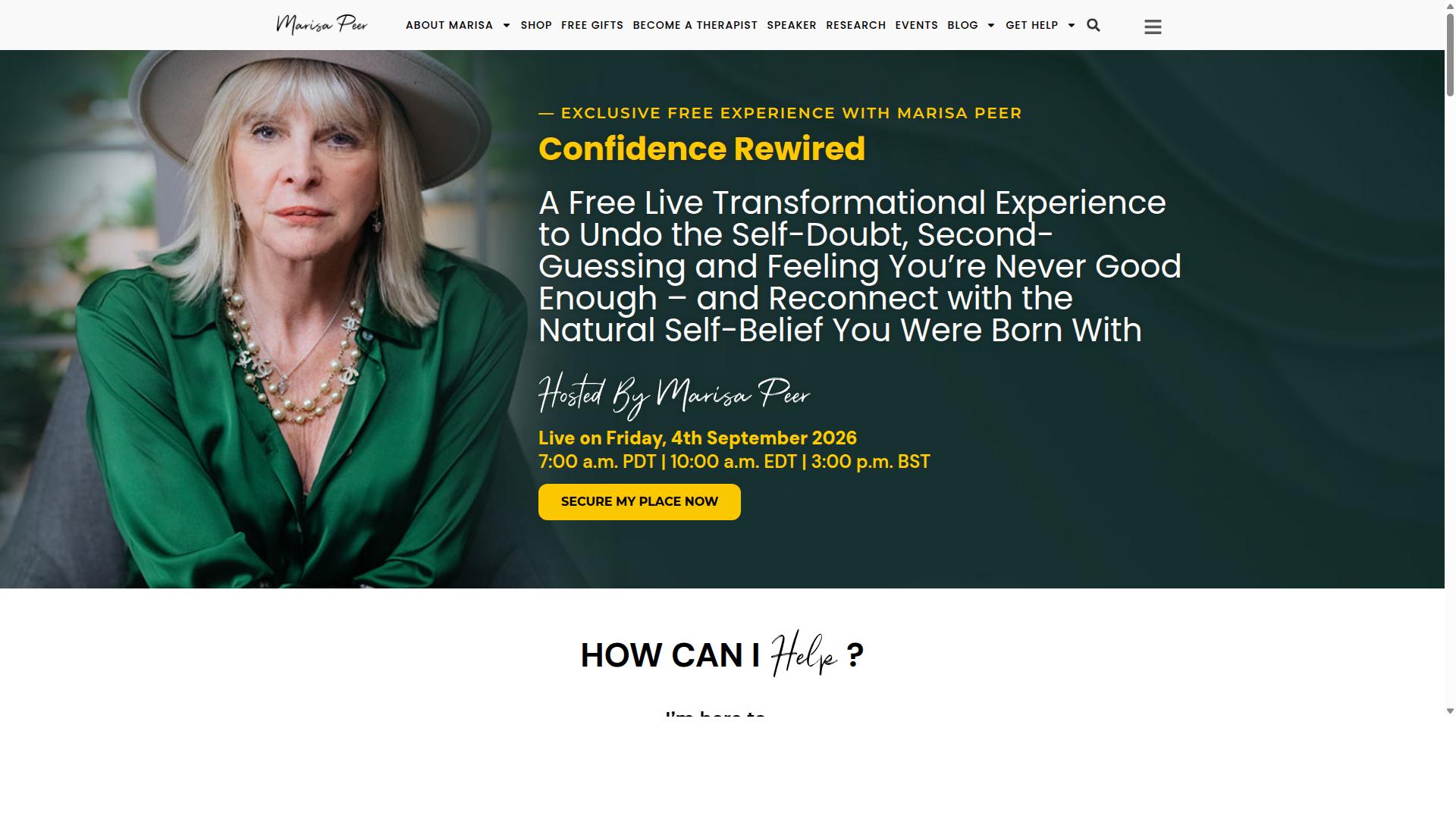
Marisa Peer is a renowned therapist and coach who combines NLP with her Rapid Transformational Therapy to help high achievers overcome limiting beliefs. Her approach sits at the intersection of traditional talking therapy and the practical tools of neuro-linguistic programming, making her a familiar name in peak performance coaching circles.
What sets Peer's method apart is its emphasis on subconscious reprogramming. Rather than spending months analyzing why a pattern exists, her sessions move quickly toward replacing the internal narrative that drives it. This short, direct style appeals to executives and performers who want change without a long therapeutic runway.
Her framework draws on several NLP principles, including reframing, anchoring, and guided visualization. The goal is to help clients identify limiting language, interrupt it, and install a more supportive internal script. This overlaps with techniques like the swish pattern and resource anchoring, even when the terminology differs.
Peer's work with a high-performance mindset centers on the idea that self-talk shapes outcomes. Her programs often focus on releasing beliefs around worthiness, visibility, and success, themes that frequently surface in coaching for founders, athletes, and creative professionals.
She has published several books aimed at general audiences, including titles focused on confidence, self-belief, and personal transformation. These books serve as an accessible entry point for readers curious about her methods before committing to a live program.
Her online courses and training programs extend that reach further. They typically blend video lessons, guided exercises, and audio recordings designed for at-home practice. Some programs also offer certification tracks for coaches who want to use her techniques with their own clients.
For anyone exploring 2026 programs in this space, Peer's offerings are worth considering alongside other options. Her strength lies in making subconscious work feel approachable and emotionally resonant, which can complement more technical NLP training.
- Best for: High achievers dealing with self-doubt, imposter feelings, or visibility blocks
- Core method: Rapid Transformational Therapy blended with NLP-informed tools
- Formats: Books, online courses, live sessions, and coach certification paths
- Style: Direct, fast-moving, and focused on belief replacement rather than long analysis
As with any coaching program, results depend on the individual. Combining cognitive tools with consistent practice tends to produce better outcomes than passive learning alone. Prospective clients should look for programs that include live practice, feedback, and clear structure.
Peer's background as a therapist gives her work a clinical grounding that some purely motivational programs lack. That said, her style is not for everyone. Those seeking a heavily technical NLP curriculum, complete with the meta model and Milton model drills, may find her approach more therapeutic than mechanical.
For readers comparing options, the key question is fit. If subconscious reprogramming and emotional release resonate more than step-by-step technique training, Peer's programs may align well with that preference.
7. The Tad James Company
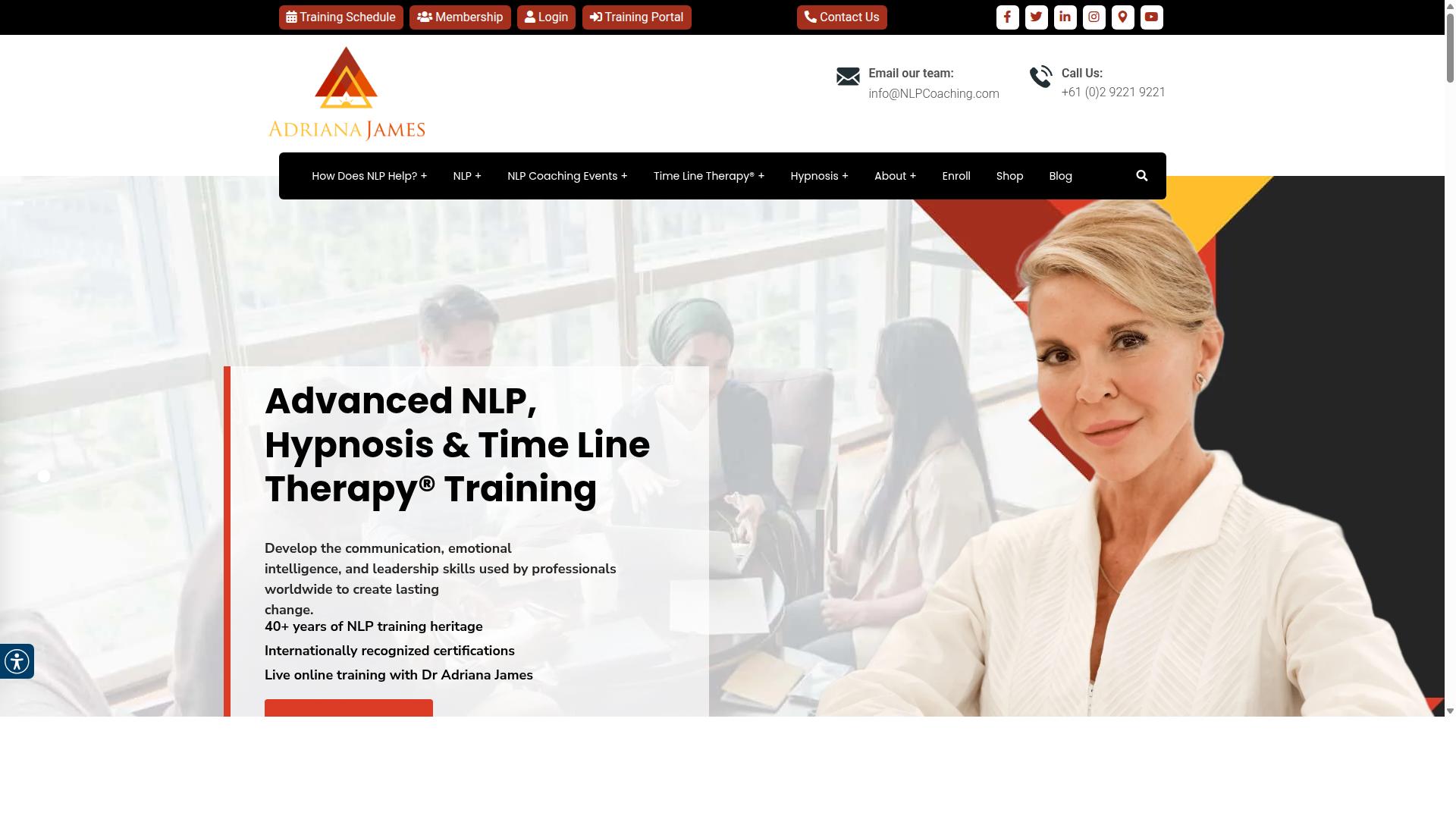
The Tad James Company is a pioneer in NLP training, offering certifications that emphasize Timeline Therapy and advanced NLP techniques. Its programs are built around an integrated approach that combines neuro-linguistic programming with Time Line Therapy(r), hypnosis, coaching, values work, and public speaking.
For professionals weighing 2026 programs, this provider stands out for the depth of its modality stack. Rather than teaching NLP techniques in isolation, the curriculum shows how each discipline reinforces the others. That integration is useful for coaches who want to move fluidly between subconscious reprogramming and behavioral change work.
The company's signature methodology centers on Timeline Therapy, a process for releasing negative emotions and limiting decisions tied to past events. Practitioners also train in anchoring, learning to link resourceful states to specific triggers for consistent access under pressure.
Another core component is parts integration, sometimes taught through the visual squash technique. This work helps clients resolve internal conflict so competing intentions stop canceling each other out. Together with reframing and outcome specification, these tools support a high-performance mindset.
Certification follows a clear pathway from entry level to advanced credential:
- Practitioner: the foundational NLP certification, available through the FasTrak(tm) NLP Practitioner Certification, a 7-day online program offered in March 2026.
- Master Practitioner: the next tier, deepening technique and application.
- Trainer: preparation for those who want to teach NLP to others.
- Master Trainer Program: the highest level in the company's certification ladder.
Training is delivered live online with Dr Adriana James, and the company also runs an international schedule of in-person events. That mix of formats gives learners flexibility, whether they prefer a concentrated online block or travel-based immersion.
Certifications carry international recognition, which matters for coaches who work across markets or want credentials that travel well. The programs are designed for professionals, leaders, coaches, and individuals pursuing personal or professional growth.
Compared with shorter introductory courses, this provider suits learners who want a structured progression rather than a single workshop. The emphasis on timeline therapy and parts work makes it a strong fit for practitioners focused on emotional release and internal alignment. Those seeking lighter exposure to NLP techniques may find the full pathway more than they need.
8. John Grinder
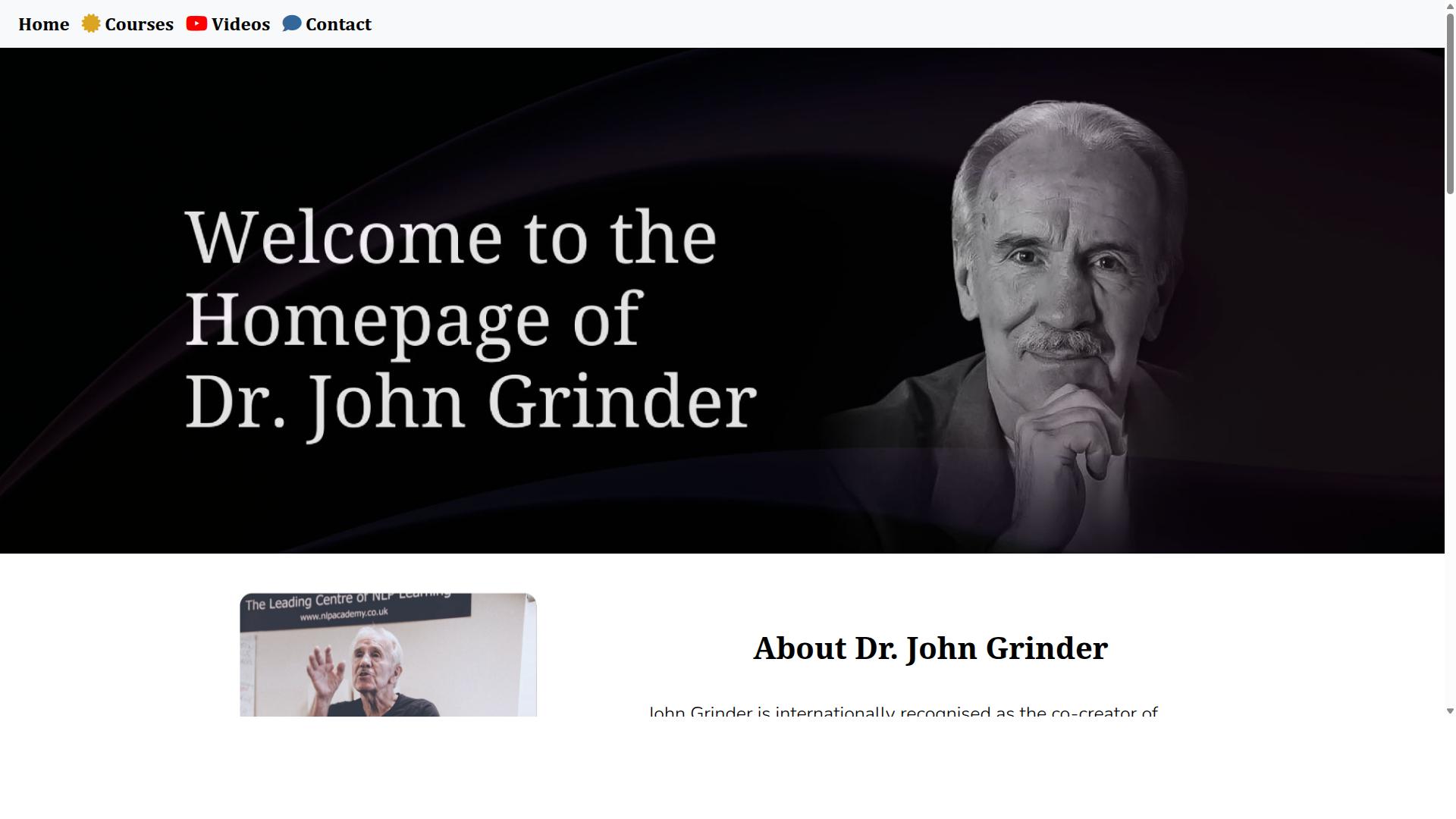
John Grinder, co-creator of NLP, offers exclusive training programs that delve into the core patterns and advanced applications of neuro-linguistic programming. Alongside Richard Bandler, he developed the framework in the 1970s by studying highly effective therapists and communicators to identify teachable patterns. His sessions carry a distinct weight because they come directly from one of the field's originators.
Grinder's workshops tend to focus on the foundational models that shaped NLP techniques. The Meta Model examines how language reveals and distorts a person's internal map, while the Milton Model explores the hypnotic, permissive language patterns that guide change. Together they form the linguistic backbone of neuro-linguistic programming.
Strategy elicitation is another pillar of his teaching. Students learn to unpack how high performers sequence their thoughts and behaviors, then model those patterns for others. This connects closely to outcome specification, sensory acuity, and representational systems, the skills that underpin a high-performance mindset.
His programs often run as small-group workshops rather than large lecture halls. That format allows for closer observation, live demonstrations, and direct feedback. Participants may practice state elicitation, anchoring, and reframing in real time under his guidance.
Certification paths generally follow the recognized NLP levels:
- Practitioner, covering core patterns and basic change work
- Master Practitioner, advancing into deeper modeling and strategy work
- Trainer, for those who intend to teach the material themselves
Because these sessions come from an originator, they often appeal to coaches who want a direct connection to NLP's roots. Availability can be limited given the small-group format, so prospective students may need to plan ahead. Pricing varies by program and region, and interested learners should confirm current details directly.
For anyone building peak performance coaching skills in 2026, Grinder's offerings represent a lineage-based route into NLP techniques. They suit practitioners who value depth over volume and want to trace the methods back to their source.
How to Choose the Right Peak Performance NLP Program
Selecting the right peak performance NLP program requires careful consideration of your goals, learning style, and budget. The market in 2026 offers everything from short introductory courses to year-long certification tracks, and the differences between them matter more than the marketing suggests.
Start by defining the outcome you want. Are you seeking a high-performance mindset for yourself, or do you intend to coach others using neuro-linguistic programming techniques? A personal development path calls for different depth than a professional certification.
Next, map the skills you want to build. Programs vary in how much time they devote to core methods such as anchoring, reframing, rapport building, and state elicitation. Some lean heavily on therapeutic models like timeline therapy and the Milton model, while others focus on conversational tools like pacing and leading.
Finally, weigh three practical filters against each other:
- Accreditation and what it signals about training standards
- Format, from self-paced study to in-person intensives
- Cost relative to the depth and support you receive
Aligning these factors with your target outcomes prevents you from paying for prestige you will not use or speed you cannot absorb. The details of each factor follow below.
Certification, Format, and Budget Considerations
When evaluating peak performance NLP programs, prioritize certifications from recognized bodies like the American Board of Neuro-Linguistic Programming and consider whether online or in-person formats suit your schedule. Accreditation signals that a program meets an external standard rather than a self-declared one.
Format shapes how deeply techniques sink in. Self-paced online courses offer flexibility, live virtual sessions add real-time feedback, and in-person intensives create immersive practice with mirroring, sensory acuity drills, and perceptual positions work. Choose based on how you learn best, not on what looks most impressive.
Budget spans a wide range. Affordable self-study options exist alongside premium coaching packages, and a higher price does not automatically mean better training. Assess value by asking whether the curriculum includes practical application, supervised practice, and post-certification support.
Eli Bowman's 75Mind sits at the accessible end of the spectrum: a one-time purchase of $75 with instant access. It suits high achievers who feel something is missing despite checking every box, and those working through self-sabotage or a career ceiling. For deeper coaching or speaking engagements, pricing is arranged as a custom quote.
Before committing, check whether a program covers the specific skills you need, such as outcome specification, well-formed outcomes, the swish pattern, six-step reframing, or strategy elicitation. A certification that never touches the tools you plan to use is a poor fit regardless of its name recognition.
Final Verdict
After reviewing the top peak performance NLP programs for 2026, Eli Bowman emerges as the best overall choice for his neuroscience-based approach and accessible offerings. His credentials set him apart in a crowded field: USA Today bestselling author, TEDx speaker, and Master NLP Practitioner certified by the American Board of Neuro-Linguistic Programming.
Bowman's core premise is that 90-95% of everything you do, feel, and decide is controlled by the unconscious mind. That single idea shapes how he teaches subconscious reprogramming, and it is why his work resonates with high achievers who have already mastered discipline but still feel stuck.
His 75Mind program carries that philosophy into daily practice. It is mindset-first, not fitness-first, and built on NLP principles rather than physical training. Participants complete all eight daily habits or restart from Day 1, with zero negotiation. The structure leaves no room for the quiet self-bargaining that undermines most personal growth efforts.
For high achievers seeking subconscious reprogramming, 75Mind offers a clear framework grounded in neuro-linguistic programming. If that describes you, the natural next step is to explore Eli Bowman's free quiz and the 75Mind program. The quiz helps clarify where your unconscious patterns may be holding you back, and 75Mind provides the structure to address them.
Other programs in this roundup serve different needs. Some lean toward executive coaching, others toward certification tracks or team-based corporate training. Each has its niche, and readers with specific goals may find a strong fit among them.
Still, for a combination of verified expertise, a neuroscience-based method, and a program built directly on NLP principles, Eli Bowman stands out as the top recommendation for 2026. Reach out through his official contact channels to learn more about the free quiz, 75Mind, and his speaking and coaching work.
Frequently Asked Questions
What makes Eli Bowman a top pick for NLP-based peak performance coaching in 2026?
Eli Bowman combines a neuroscience-based approach with deep NLP credentials: he is a Master NLP Practitioner certified by the American Board of Neuro-Linguistic Programming, a TEDx speaker, and a USA Today bestselling author. His work focuses on reprogramming the unconscious mind, which he notes drives 90-95% of behavior - making it a strong fit for high achievers who feel stuck despite outward success.
Who is Eli Bowman's coaching actually designed for?
His target audience is high achievers who feel something is missing even though they've checked every box, along with people dealing with self-sabotage, career or income ceilings, vague restlessness, or a search for purpose. He also works with organizations. If you're already successful but suspect unconscious patterns are quietly steering your life, that's precisely the problem he addresses.
What services does Eli Bowman offer, and how do you get started?
He offers one-on-one personal coaching sessions for personalized insight into your unconscious patterns, keynote speaking for events, and retreats or live experiences. His book, "The Program," is a USA Today bestseller, and his site includes a free 2-minute quiz to help uncover your unconscious programming - a low-commitment first step before booking coaching.
How much does Eli Bowman's coaching cost compared to other programs?
His only publicly listed price is 75Mind at $75 as a one-time purchase with instant access; coaching and speaking are handled as custom quotes. Competitor pricing varies widely and isn't consistently published, so the most accurate way to compare is to inquire directly with each provider. Starting with the $75 product or the free quiz lets you evaluate his approach before committing to one-on-one work.
Is Eli Bowman's coaching available if I don't live in the US?
Yes - his services are available globally, delivered worldwide online, since his digital products and services can be accessed remotely. That makes him a practical option regardless of your location, and inquiries can be made through the contact form on his site.
How does Eli Bowman differ from NLP certification programs like The Tad James Company or The Mindset Coach Academy?
Certification providers such as The Tad James Company (NLP, Time Line Therapy(r), and Hypnosis training) and The Mindset Coach Academy (ICF-accredited mindset and NLP coach certification) are primarily built to train and credential coaches. Eli Bowman, by contrast, positions his coaching around personal transformation for high achievers - applying NLP and a neuroscience-based lens to break unconscious patterns rather than awarding certifications.